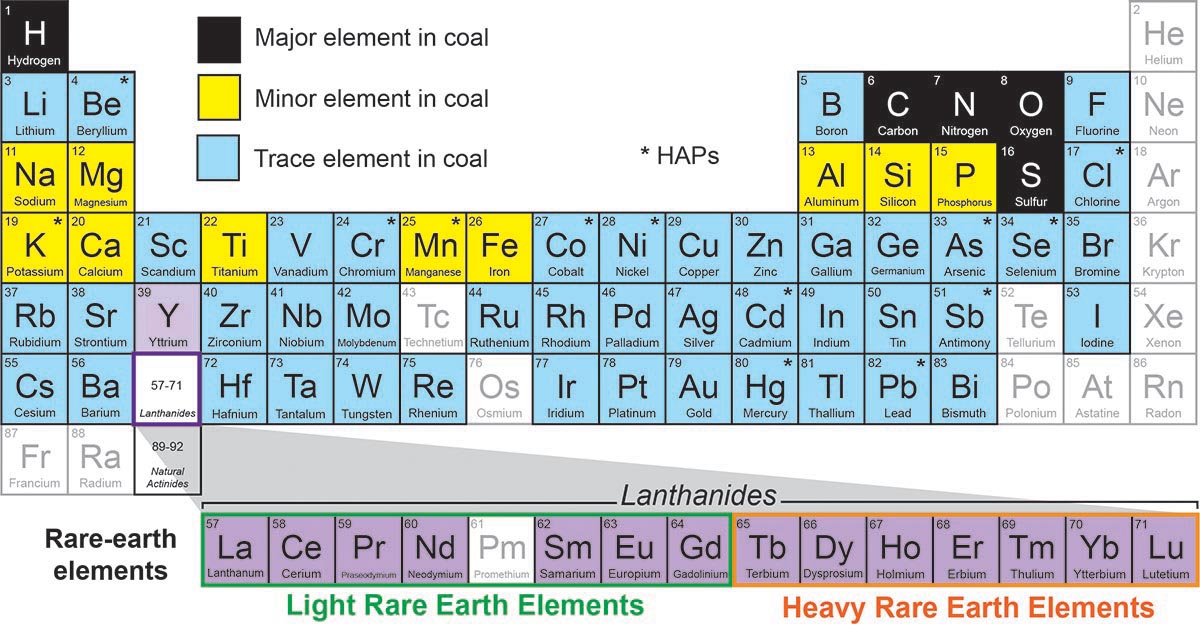
Rare-earth elements (REEs) include many elements that most people have not heard of, including the lanthanide series elements (cerium through lutetium) and ytterbium. Although relatively unheard of, rare-earth minerals are very important in our modern technological world, because they're in a variety of products used every day, including televisions and cellphones. Scientists are looking for new sources of these elements as demand increases. Most of the REEs our country uses come from other countries. KGS is working with other researchers to see if there may be non-traditional sources of REEs we can use here in the United States. One potential future source may be certain coal beds and coal bed refuse deposits.
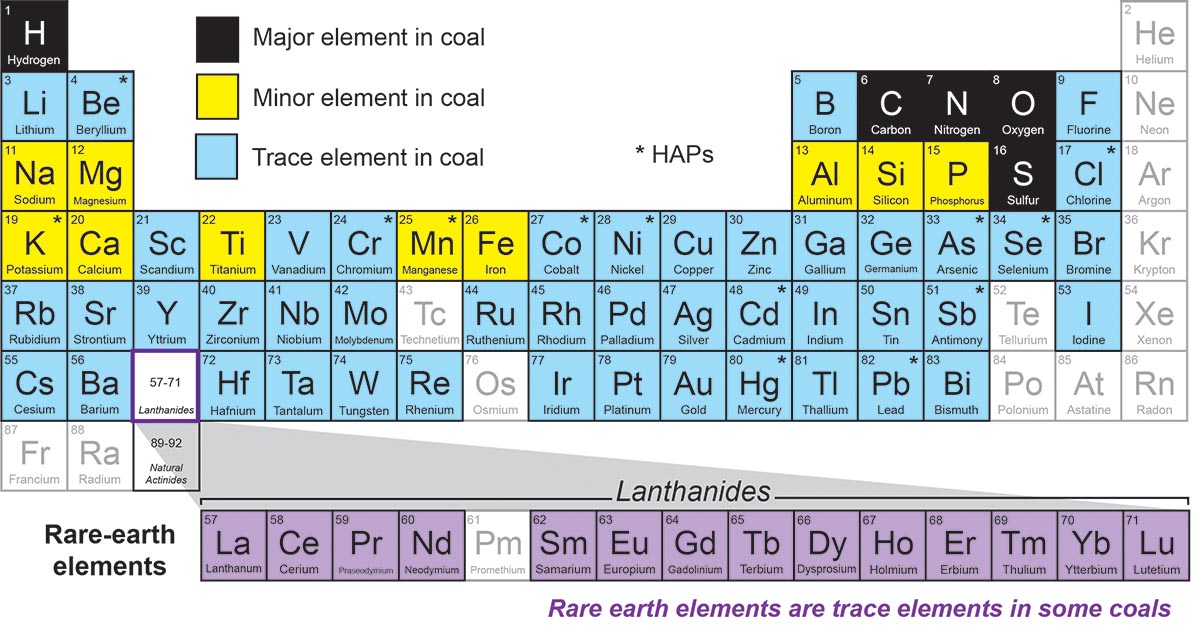
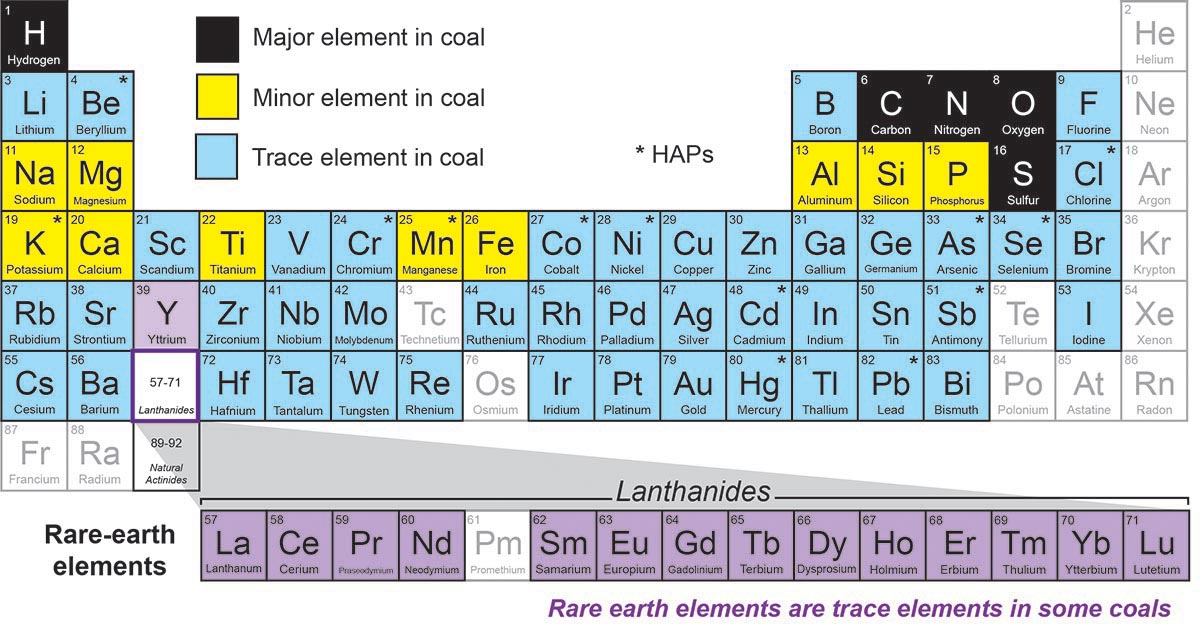
Rare-earth elements that have been reported in coal seams. Not all seams have these elements.

The element Yittrium is not a Rare Earth Element, but it behaves chemically like a rare earth, so is sometimes included with rare earths.

REEs are sometimes classified or divided into light (LREE) and heavy (HREE) rare earths. Light and heavy rare earths have different properties, so are used for different technologies. Yittrium behaves similarly to heavy REEs.

Analyzing for Rare Earths

Back to Mineral Matter

Last Modified on 2025-11-17
Back to Top