
Background to development of the ferm classification

In the early 1970s, geologists at the University of South Carolina began research to assess the geology of strata at operating coal mines in the Appalachian coal fields. They immediately became aware of massive quantities of data that were being collected by coal companies using various core drilling techniques, and recognized the value of using those data for their research. One problem with the data was the poor quality of the rock descriptions made by the drillers or company engineers.
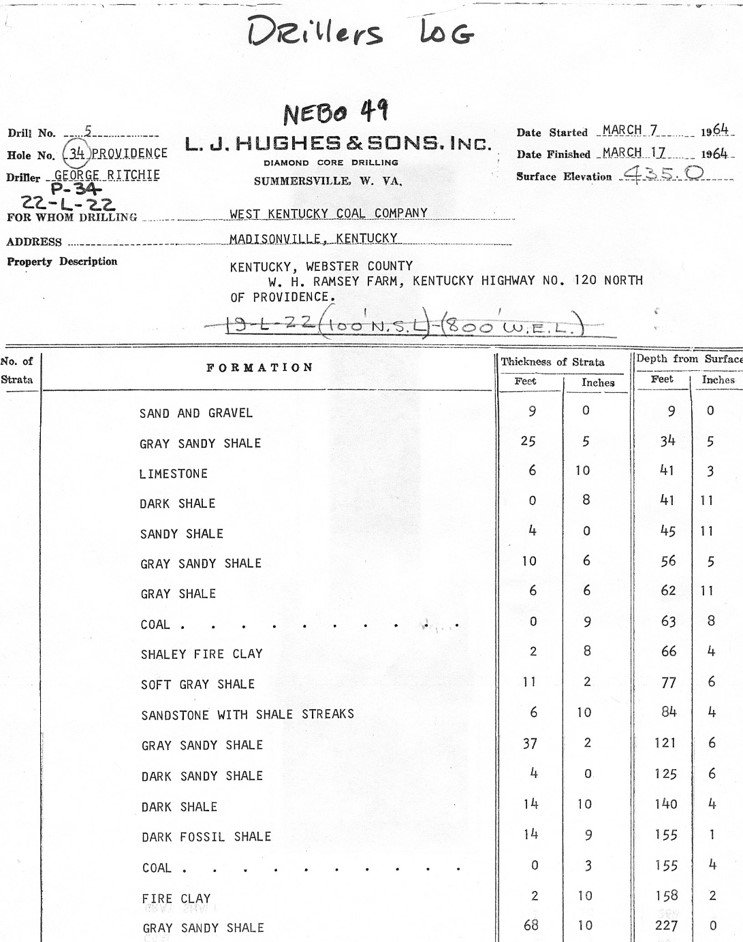
The solution to the problem was thought to be employing geologists trained in recognizing sedimentary rocks to make the descriptions, which would increase the usefulness of the data. Indeed, several geologists sent to log a number of closely spaced cores returned with much more detailed descriptions of the various kinds of rocks. Unfortunately, there was no consistency in the way the geologists described the same rocks, so comparing results from different operators was difficult.

It was apparent that a better system for describing the cores was needed for the field conditions under which most cores are described. The method needed to be rapid, repeatable, and easy to learn while maximizing the amount of information that could easily be observed or determined with simple tests. What emerged was a series of photographic core-logging manuals, each prepared for a particular coal-mining region in the United States.
This website describes how the rock classification was developed, the rock properties on which it is based, and a numeric coding system that facilitates rapid note taking and data analysis.